This was printed in the Grass Valley Union Friday, November 25, 2005, and I wanted to share this great idea with everyone. Many people I know are cutting back on frivolous gifts and donations this year, but here is a gift idea that keeps on giving, long after the holidays are over. Of course, considering the joy my own flock has brought me, I may be slightly biased about wanting more people to experience chickens...
A Gift That Nourishes
A few years ago I received one of the best Christmas gifts of my life. My mother had bought in my name, from Heifer International, a flock of chickens for a family from a third world country. 20.00 had helped an entire impoverished family become more self-reliant by providing income-producing chickens along with a training program.
My own chickens do so much for my family. They lay eggs, fertilize, eat the bugs--including earwigs, scare the rattlesnakes away, go to bed by themselves and wake us up.
So this year, I gave 200.00 to Heifer International which purchased ten flocks of chickens for ten families somewhere in the world and I gave a flock, on paper, to each of my close friends and family members.
Heifer International is a nonprofit organization that works to end hunger and poverty by enabling people to start their own businesses. You have the choice of goats, llamas, pigs, water buffalo, cows, beehives, sheep, camels, chickens and more. Not only do these gifts provide better nutrition for children around the world, but then the families "pass on the gift" by giving one or more of their animal's offspring to another family in need.
"Teach a man to fish and he will eat for a life time." You too can give the gift that keeps on giving. Call Heifer International at (800) 422-0755 or go to www.heifer.org
Showing posts with label food. Show all posts
Showing posts with label food. Show all posts
Thursday, December 11, 2008


Sunday, August 24, 2008
Life
 This weekend has been long, with lots of ups, and unfortunately, some downs. When I got home Friday, this huge, beautiful single rose was waiting for me. "Just because," said DH (darling husband).
 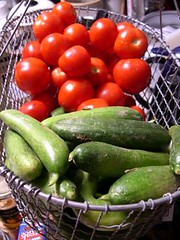 Saturday started with a trip to the farmers market, where I scored some great tomatoes and cucumbers for food preserving. I mentioned to the farmer, Lisa of Lisa's Petals and Produce, that I wanted some paste-type tomatoes for making tomato soup, and she offered up a great variety of which she had several pounds that were a little soft and were perfect for my purposes. And when I said I also wanted to make pickles, out came the tray of "too small" cucumbers that were, again, perfect. More on that in a bit.
 A stop by the nursery to pick up some broccoli starts. I will start kale and peas from seed, but it seems like I always start my fall broccoli too late and never get good production, so I'll just get a jump with the transplants. They are going in a bed that had bush beans which are now done producing, so they'll have plenty of time to get established before the weather turns cold.
Saturday night was the Nevada County Land Trust's annual fund-raising concert. It was at a new venue this year, Pilot Peak Winery, which turned out to be beautiful. By the time the second performer finished, it was after 11pm, the stars were out and the waning moon was just popping up over the horizon...
Let's just assume that after two glasses of wine at the concert (it was a winery, afterall) and getting home just after midnight, all I really wanted to do was sleep. So when I was wakened by chicken squawking at 3am, I was pretty grumpy. Went out to investigate, and the chicken coop was still secure, though the perch had fallen down. Since I hadn't installed the hinges on it yet, it was possible that it just fell under the weight of the chickens shifting on the perches. It wasn't
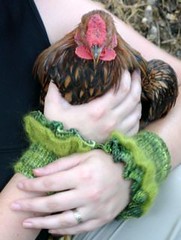 until 6:45 that my husband spotted the gray fox just down the hill from the coop. We thought everything was ok, until we noticed that Nina, our sole remaining hen from the original group, was bleeding around her beak. Her face had been scratched and the bottom of her beak half torn off. The fox had been able to stick a paw through the mesh and managed to get at her on the perch. We tried to clean up the blood to assess the damage, but you could tell she was in a lot of pain. We kept her under close observation, and forced her to drink, but she couldn't eat or drink with her beak damaged. So once again, my courageous husband took care of things. And then we attached fine wire mesh to the more open mesh of the large door. I don't think anything short of a bear could get to our chickens inside the coop now. And I attached the perch to the wall, the last, finishing touch.
 Numbed, like my poor rooster, I focused on preserving the extra produce I purchased on Saturday. We put up four pints of garlic dill pickles, six cups of an Indian influenced relish and three and a half quarts of tomato soup. I want to put up some extra jars each week so that we can enjoy the fresh flavors deep in winter, when the produce is just a memory.

Sunday, August 17, 2008
Harvest Day!

We have an egg! And a green egg at that! This means that one of the new chickens is part Ameracauna! There isn't any nutritional difference between colored and white eggs, but I like the range of colors. It just screams non-conformist, big-ag egg production and pays homage to home breed poultry diversity.
Now, there is a huge nutritional difference between pasture and true free-range animals. The yolks are vibrant, almost neon yellow-orange. But the difference goes far beyond just looks. Pastured animals are healthier and their eggs show it; less cholesterol, higher omega-3's, overall greater nutritional value.
Think your store-purchased "free-range" labeled eggs are really free-range? Most commercially produced eggs which are labeled free-range in fact have very little outside time on pasture. The birds are kept in a large barn for their first six weeks. After that, a door is opened to the outside, but most birds never actually go outside. If they do, they usually find an empty dirt lot to roam... Not exactly a pastoral process.
What to do? Check farmer's markets to find a local egg source. 4-H kids often raise chickens and have either eggs or extra chickens available for sale. If you have a neighbor with chickens, you can see if they have extra eggs they would be willing to sell.

Besides our first egg, we harvested our fingerling potatoes and the first of our tomatoes. If you look closely, you'll see that the tomatoes have extra protusions on the bottom of the tomatoes. Not sure what it's all about, but very cool and unique. The long, green pepper looking thing is a San Marzano tomoto. It fell off when DH poked at it. Even though it's green it tasted pretty good - you can see where we dared each other to nibble on the bottom end.
Sunday, July 13, 2008
Garden Babies
An inspection of the garden reveals the fruits which will be ours, in some cases in a matter of days. We have baby tomatoes on most of the vines, baby watermelon, baby beans. There are the first of the female flowers on the acorn squash plants. Yipee!

In the meantime, look at these beautiful beefsteak tomatoes from Lisa's Petals and Produce, round zucchini from Blossom Hill, and cherry tomatoes from Natural Trading Company. Scrumptious! And then there's the locally produced, hormone-free bacon and sausage from Coffee Pot Ranch. DH is making a vegetable and sausage soup for dinner. It's summer dining at it's best.

And here is my fledgling rooster presenting one of my favorite comfort foods, chicken pot pie! We have been letting the chicks run around in the back before they begin their tour of the property in their chicken tractor. They have become confident enough to explore the front area of the house. One morning I came out and couldn't see or hear the chicks. As I'm listening more closely, Cassie, one of our cats, comes tearing around the corner from the front of the house, followed closely by the chickens! The cat took refuge behind my legs, while the chickens skidded to a stop in front me. When questioned, no one had anything to say, not a meow, nor a peep!
In the meantime, look at these beautiful beefsteak tomatoes from Lisa's Petals and Produce, round zucchini from Blossom Hill, and cherry tomatoes from Natural Trading Company. Scrumptious! And then there's the locally produced, hormone-free bacon and sausage from Coffee Pot Ranch. DH is making a vegetable and sausage soup for dinner. It's summer dining at it's best.
And here is my fledgling rooster presenting one of my favorite comfort foods, chicken pot pie! We have been letting the chicks run around in the back before they begin their tour of the property in their chicken tractor. They have become confident enough to explore the front area of the house. One morning I came out and couldn't see or hear the chicks. As I'm listening more closely, Cassie, one of our cats, comes tearing around the corner from the front of the house, followed closely by the chickens! The cat took refuge behind my legs, while the chickens skidded to a stop in front me. When questioned, no one had anything to say, not a meow, nor a peep!
Thursday, June 5, 2008
Corn and Beans
As part of my effort to eat fresh produce as well as preserve food for the rest of the year I'm planting a modest patch of corn and lots of beans. Given my husband's love of fresh corn, I doubt there will be much left over to save.
The beans on the other hand are much more exciting. I'm planting several kinds of bush beans and pole beans for fresh eating, drying and freezing. I love legumes for their versatility. Fresh, dried, canned, frozen - the opportunities are infinite. I dream of bean purée dips, chilled beans with pesto, fresh beans with mint and lemon...
My first introduction to Musica pole beans, a type of Romano bean, was through a coworker who brought in several pounds to work. At 8" long, these beans were perfectly tender and fresh, with an amazing flavor. I casually snacked on the beans for several hours, until just before closing, at which point I began to moan, "I don't feel good. My belly hurts!" Yes - there is such as too much of a good thing!
Like most things I plant, most of these are heirlooms, tried and true favorites for generations. Here's this year's lineup:
Bush Black Turtle (dry soup bean), Blue Lake (fresh or dry), mung (dry and sprouts), edamame (aka soybeans, fresh or frozen), Tendergreen (fresh or dry) and Black Kabouli Garbanzo (fresh, dry, hummus).
Pole Kentucky Wonder (fresh, frozen or dried), Musica (aka Meralda, fresh or frozen), and Painted Lady Runner Bean (fresh, frozen or dried).
The beans on the other hand are much more exciting. I'm planting several kinds of bush beans and pole beans for fresh eating, drying and freezing. I love legumes for their versatility. Fresh, dried, canned, frozen - the opportunities are infinite. I dream of bean purée dips, chilled beans with pesto, fresh beans with mint and lemon...
My first introduction to Musica pole beans, a type of Romano bean, was through a coworker who brought in several pounds to work. At 8" long, these beans were perfectly tender and fresh, with an amazing flavor. I casually snacked on the beans for several hours, until just before closing, at which point I began to moan, "I don't feel good. My belly hurts!" Yes - there is such as too much of a good thing!
Like most things I plant, most of these are heirlooms, tried and true favorites for generations. Here's this year's lineup:
Bush Black Turtle (dry soup bean), Blue Lake (fresh or dry), mung (dry and sprouts), edamame (aka soybeans, fresh or frozen), Tendergreen (fresh or dry) and Black Kabouli Garbanzo (fresh, dry, hummus).
Pole Kentucky Wonder (fresh, frozen or dried), Musica (aka Meralda, fresh or frozen), and Painted Lady Runner Bean (fresh, frozen or dried).
Monday, May 26, 2008
Artichokes
Our artichokes are still producing, and our three year-old speciman is rather spectacular. Artichokes were a bit problematic in our garden microclimate. We're in the Bear River canyon, which tends to be 4-5° cooler than our neighbors due to the accumulation of cool air. This means that even though we are at a relatively low foothill elevation, we accumulate frost amounts similar to gardens in Nevada City, at double our elevation.

The extra frost we get in winter has previously set back the plants, so that about the time they have resprouted in spring, they do not have enough cool weather to produce flowers. This year I covered them with floating rowcovers, and they kept their foliage though the winter. This spring we have been rewarded with several weeks of artichokes. It looks like we'll have at least one more harvest, maybe two if the weather cooperates!

The extra frost we get in winter has previously set back the plants, so that about the time they have resprouted in spring, they do not have enough cool weather to produce flowers. This year I covered them with floating rowcovers, and they kept their foliage though the winter. This spring we have been rewarded with several weeks of artichokes. It looks like we'll have at least one more harvest, maybe two if the weather cooperates!
Sunday, May 25, 2008
Potatoes
My potatoes were planted about a month ago and are growing strongly. I'm using the bin method of growing them. The green tops can grow through the holes, and hay is added periodically to encourage the growth of potatoes, which is not a root, but a specialized plant stem. Traditionally, potatoes are "hilled up" to stimulate the growth of tubers. Growing in a bin means growing above ground, and means no digging for the potatoes at harvest time. Just open the bin and the potatoes spill out onto the ground!
 You can see that it's time to add another layer of straw. I'm using rice straw which minimizes resulting grass weeds that could be introduced when using another type of straw such as oat or rye.
Oh - what kind of potatoes am I growing? Russian banana fingerlings, a particularly tasty variety with an amazing, creamy texture.
Tomato Time!
I was worried about not getting my heat loving plants in the ground the week of Mother's Day, and then it was too hot to plant. My tomatoes, squash and peppers would have been hard pressed to know if summer was coming or going the past two weeks, culminating in yesterday's rain showers. However, the soil temp is holding steady in the 80's, a great temperature for planting corn, beans, and other items from seed, and is also sufficiently warm for everything else to go in the ground.

So I've been trying to plant something everyday over the last week. Asters, eggplants, bush beans, and today, finally the tomatoes. A friend of mine grows a combination of new (to us) varieties mixed with old faves. Here's the rollcall for this year: Azoycha, Glacier, Siletz, Black Prince, Aunt Ruby's German, Mortgage Lifter, San Marzano Redorta, Sun Gold, and Pink Ping Pong. Most of these, new to us or not, are heirloom varieties, and represent a range of colors, sizes, purposes and maturation times.
Unless you shop farmer's markets or drool over seed catalogs you are probably unfamiliar with these varieties, as they are not grown in conventional, corporate fields. Most of the tastiest varieties do not hold up well during conventional harvesting, packing and transportation processes, and are therefore never known to supermarket shelves. What you get instead are those sawdust grocery store, second rate imitations pretending to be tomatoes.
San Marzano Redorta is an amazing paste tomato which will become canned and frozen sauce. Black Prince, Mortgage Lifter, Glacier and Siletz will probably be dried or canned in addition to fresh eating. Sun Gold and Pink Ping Pong will be lucky to make it into the house as they are some of my favorite fresh eating tomatoes.

So I've been trying to plant something everyday over the last week. Asters, eggplants, bush beans, and today, finally the tomatoes. A friend of mine grows a combination of new (to us) varieties mixed with old faves. Here's the rollcall for this year: Azoycha, Glacier, Siletz, Black Prince, Aunt Ruby's German, Mortgage Lifter, San Marzano Redorta, Sun Gold, and Pink Ping Pong. Most of these, new to us or not, are heirloom varieties, and represent a range of colors, sizes, purposes and maturation times.
Unless you shop farmer's markets or drool over seed catalogs you are probably unfamiliar with these varieties, as they are not grown in conventional, corporate fields. Most of the tastiest varieties do not hold up well during conventional harvesting, packing and transportation processes, and are therefore never known to supermarket shelves. What you get instead are those sawdust grocery store, second rate imitations pretending to be tomatoes.
San Marzano Redorta is an amazing paste tomato which will become canned and frozen sauce. Black Prince, Mortgage Lifter, Glacier and Siletz will probably be dried or canned in addition to fresh eating. Sun Gold and Pink Ping Pong will be lucky to make it into the house as they are some of my favorite fresh eating tomatoes.
Wednesday, January 23, 2008
Nutritional Extremes
The holidays are over now, and it means that I've heard my years' share of Christmas classics, including my favorite, Do They Know It's Christmas Time At All, by Band Aid. The song was first produced in 1984 as a fund raising relief effort for famine-starved Ethiopia. At nine years old, my friends and I begged our parents for the album, which we had seen advertised on MTV. I'm not sure we really grasped the concept of people starving while we admired famous rock stars. We even play acted the video, taking turns pretending to be our favorite singers.
I'm not sure that as an adult over twenty years later that I really have any better grasp on what it is to starve. Sure, I ate my share of Ramen noodles in college, but then again, I liked Ramen noodles, so it wasn't a hardship. After all, I had other choices.
However, I do live everyday in world where the question is not, "Can I eat today?," but rather, "What do I want to eat today?." I often find myself in the same rut - not enough time to shop or cook, grumbling instead about eating fast food for lunch, and then making just about the poorest choice possible, all the while feeling victimized by the lack of wheat-free choices at most fast food venues.
I think that as Americans, we face two major points when it comes to our over consumption. Firstly, we seem to feel entitled to our right of many choices, with many people feeling they deserve that high calorie, feel-good treat. Secondly, it has actually become more expensive to eat whole foods than it has to buy highly processed foods with minimized nutritional value.
I have experienced the first for years. "I worked hard today, so I deserve ____!" Before I knew it, I needed those rewards, even when my clothes didn't fit anymore. The second was brought to my attention when I went through credit counseling several years ago. After going through our budget, the counselor suggested that we could save money by buying less fresh produce and more canned or frozen produce, or perhaps eating less vegetables altogether! He was very serious that we could save money by compromising, in fact that is exactly the compromise that many lower income families are forced to make.
In Barbara Kingsolver's book Small Wonders she writes, "The United Nations estimates that $13 billion above current levels of aid would provide everyone in the world, including the hungry within our own borders, with basic health and nutrition. Collectively, Americans and Europeans spend $17 billion a year on pet food."
What keeps us from spending that money on our our species rather than on pets? If the statistics are true, that we can produce enough food to feed all of the current hungry people, and assuming that we can affect a distribution system, then what is holding us back? I don't know the answer to that question any more than I can stop my self from eating wheat entirely. I can rationalize it, and still not make sense of it.
Subscribe to:
Posts (Atom)